


"Too Indigenous" - Truth, Tourism & Responsibility
Why This Work Belongs at the Centre
I have received feedback that my focus is "too Indigenous."
I have thought about that sentence for a long time. Not because it hurt, though it did, but because of what it revealed. It assumed that Indigenous partnership is a lane a destination organization can choose to drive in or not. An optional emphasis. A personal interest of the CEO.
It is not. And on this day, the National Day for Truth and Reconciliation, I want to say plainly why.
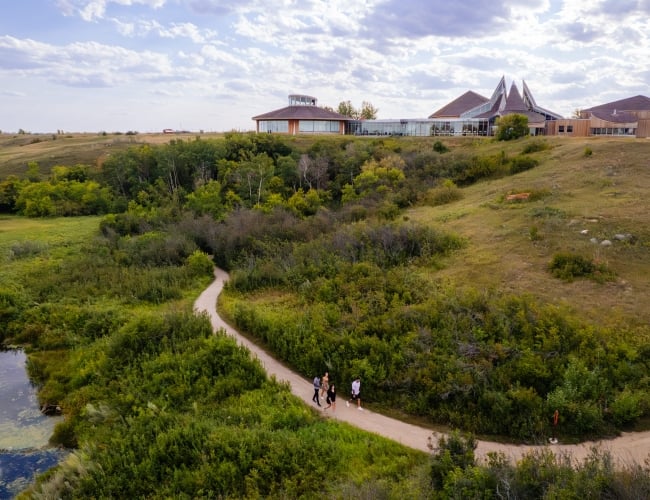
Saskatoon sits on Treaty 6 Territory and the Homeland of the Métis. Every visitor who arrives here, every conference we host, every athlete who steps onto a floor, every meal served in every restaurant, happens on that land. You cannot market a destination honestly without telling the truth about where it is.
You cannot manage a destination well without fostering a relationship with the people who have been its stewards for thousands of years. This is not a values statement. It is a description of the job.
A Commitment to Keep Showing Up
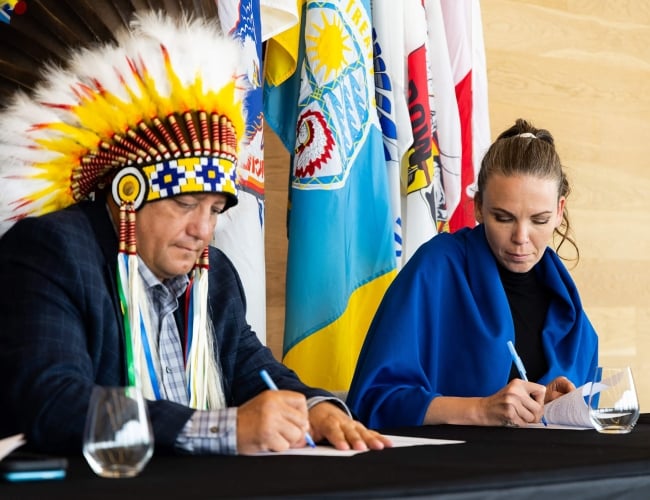
Two years ago, alongside the launch of our rebrand, Discover Saskatoon signed a partnership agreement with the Saskatoon Tribal Council, the first of its kind in Canada between a destination organization and a First Nations governing body.
That agreement commits us to acting on three of the Truth and Reconciliation Commission's Calls to Action: number 87, on telling the stories of Indigenous athletes in our history; number 89, on ensuring sport policy and programs are inclusive of Indigenous peoples; and number 92, which asks the business community to build respectful relationships, provide equitable access to opportunity, and educate its people on the history of Indigenous peoples and the legacy of residential schools.
I want to be careful here, because I have watched how easily commitments like these become paragraphs on a website. Signing was the easy part. What the agreement asks of us is to keep showing up, to be told when we get it wrong, and to change.
So here is some of what it has looked like.
Partnership in Practice
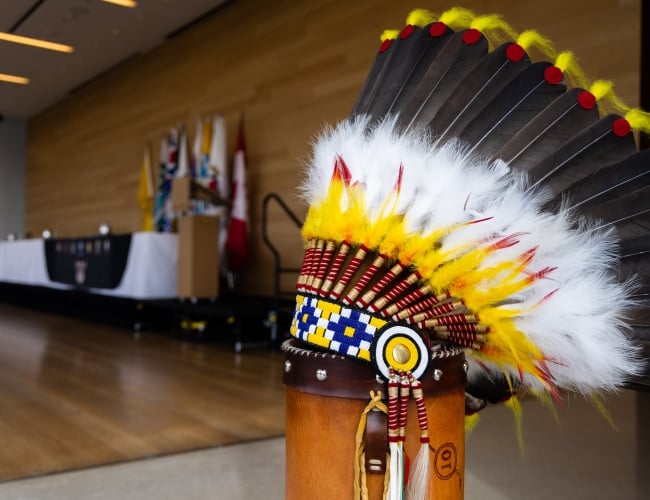
It looked like a locally made star blanket draped over the shoulders of an Olympic athlete, in front of the world, because that is how this place honours people. It looked like Wanuskewin, one of the longest continuously used gathering places on this continent, sitting at the centre of how we present this city rather than at the edge of it.
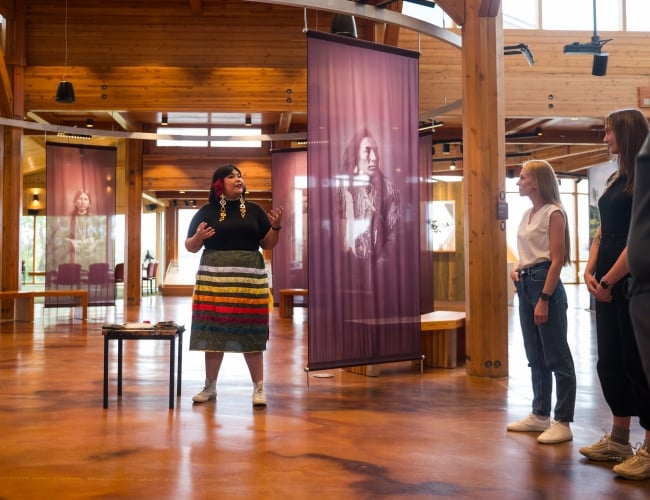
It looked like the Good Relations Guide our team built so that a business hosting visitors could learn protocol before an Elder walked into the room. It looked like the YXE Urban Games, where we tested a framework built on justice, equity, diversity, and inclusion in something as concrete as who gets invited and who gets paid.
It also looks like the times we got it wrong. When we moved too fast. When we asked for a blessing at an event without first building the relationship that would make the ask appropriate. When we assumed. I am not going to pretend any of this has been tidy, because a partnership that never requires an apology is not a partnership.
Leadership the Country Is Catching Up To
Here is what the phrase "too Indigenous" misses entirely. Indigenous leadership in Saskatchewan is not a story of need. It is a story of leadership the rest of this country is still catching up to. The first urban reserve in Canada was created here in Saskatoon, by Muskeg Lake Cree Nation, in 1988, and it has been studied and copied across the country since.
Whitecap Dakota First Nation built a destination of its own, a resort, a golf course, a spa, a casino, that draws visitors from across the prairies and now governs itself under a self-government treaty. This spring, Sheldon Wuttunee brought Indigenous leaders, industry, and government into the same room at Prairieland Park for the Saskatchewan Energy & Natural Resource Forum, because the conversation about this country's energy future is being led from here.
Every year, Neil Sasakamoose carries his father's legacy forward through the Chief Thunderstick National Hockey Championship, where Fred Sasakamoose's name fills an arena with Indigenous players from across Canada. This August, Beardy's and Okemasis' Cree Nation hosted the 150th anniversary of the signing of Treaty 6, and our friends at Pemiska delivered it so well that it should be the standard for how this province hosts anything.
Discover Saskatoon does not profit from any of this. Saskatoon does. Saskatchewan does.
My job is not to take credit for it. My job is to make sure that when the world looks at this province, it sees it.
Learning to See This Place Differently
I came to this province as a visitor. I had spent my career in tourism and still I had misjudged this place completely. Standing at Jan Lake, under more sky than I had ever seen, I felt the particular humility of being shown how wrong you can be about something you thought you understood. I have carried that feeling into this work. It is the right posture for someone who has been asked to help tell the story of a place that was never hers to begin with.
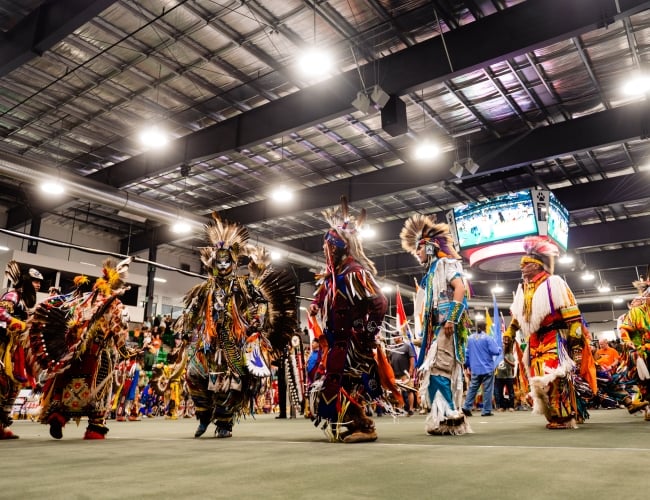
If you want to feel what I mean, the Saskatoon Tribal Council's Every Child Matters Powwow returns this year, and the invitation is not to watch. It is to come and learn. To be welcomed into a circle, to be taught what the drum is saying, to be immersed in something that has been happening on this land longer than the city has existed. That is what Indigenous tourism in this province is. Not a product. An invitation into relationship.
The river that runs through this city is my relative. I did not learn to say that in a boardroom. I learned it from people who have known this river far longer than I have, and who were generous enough to teach me.
Tourism as Truth Telling
Tourism, done honestly, is truth telling. It is one of the few industries that exists to bring strangers into contact with a place and its people. That contact can be shallow and extractive, or it can be reciprocal. The choice is ours every single day, and it is the choice that defines whether a destination deserves the visitors it asks for.
Saskatchewan's motto is Multis e gentibus vires, from many peoples, strength.
That strength is not a slogan. It is a debt, and it is a responsibility.
So yes. I focus on this. I will keep focusing on it. Not because it is my preference but because it is the work, and because a Saskatoon that tells the whole truth about itself is a Saskatoon worth visiting.
A Day for Reflection & Continued Commitment
To our partners at the Saskatoon Tribal Council, to the Elders who have taught us, and to the Indigenous entrepreneurs and knowledge keepers who welcome visitors into their stories: thank you for your patience with us.
We are still learning. We intend to keep learning.
What's your view from here?

Stephanie Pocha
As the CEO of Discover Saskatoon, Stephanie's responsibilities transcend the boundaries of traditional leadership. At the core of her role is the pursuit of championing Saskatoon's unique identity on the global stage, bridging its historic legacy with contemporary aspirations.
Discover More